New Featured Project: Bringing New Life to Legacy Equipment
Quick Summary: Chapter 2, Inc. successfully completed a critical 14-week retrofit project for an air filtration manufacturer, restoring full functionality to a custom, one-of-a-kind filter press that had become non-operational due to obsolete components. Leveraging comprehensive in-house expertise, the team modernized the legacy machine by standardizing controls on Rockwell Automation, upgrading to a user-friendly 15-inch HMI, and implementing a GuardLogix PLC for current ANSI/OSHA safety compliance. The project achieved a rapid 5.5-second cycle time, was delivered under budget, and proved that strategic retrofitting is a practical, profitable, and sustainable alternative to expensive equipment replacement, transforming the asset into a smarter, future-proof part of the manufacturer's production line.
Facing the “Replace or Retrofit” dilemma? For many manufacturers, when critical, one-of-a-kind machinery starts to fail, the choice between a multi-million dollar replacement and a cost-effective modernization becomes a high-stakes decision. Our case study: Retrofit Services for Legacy Machinery reveals how Chapter 2, Inc. used strategic retrofitting to save a manufacturer’s production line, transforming a non-functional, obsolete filter press into a modern, high-performing asset—under budget and on time.
The Challenge: A Critical Single Point of Failure
An air filtration manufacturer was facing a crisis when their custom, 1990s-era filter press—a machine described by Chapter 2’s engineer Nick Ignarski as “one of one”—suffered catastrophic failure due to obsolete components and recurring power surges. This wasn’t just a maintenance issue; it was a production bottleneck.
The customer’s core requirements were clear: restore full functionality, meet a rapid 5.5-second cycle time, and fully upgrade to modern ANSI/OSHA safety standards.
Chapter 2’s Strategic Retrofit: Performance Meets Practicality
Over a focused 14-week timeline, Chapter 2’s integrated approach leveraged its comprehensive in-house capabilities—from the Tool Room creating custom motor adapters to the Applications Team handling all electronic upgrades and programming. This single-source integration was key to avoiding multi-vendor delays and ensuring a cohesive solution.
Key Modernization Highlights:
- Technology Standardization: The team standardized all controls on Rockwell Automation Allen-Bradley components. This strategic decision simplifies maintenance, reduces spare parts inventory, and streamlines training for new, tech-savvy employees.
- Enhanced User Experience: The obsolete 5-inch screen was replaced with a 15-inch HMI, migrating from over a dozen manual switches to a smooth, display-based, user-friendly interface.
- Safety and Intelligence: The implementation of a GuardLogix fully integrated PLC brought the machine up to current safety codes and made it smarter. New background logic was added for diagnostics, giving the maintenance team actionable operational intelligence.
Measurable Success: Better Than New
The project was an unqualified success, proving that retrofitting offers a powerful return on investment (ROI):
- 100% Functional: Restored from a completely non-operational state.
- Target Achieved: Cycle time met the ambitious 5.5-second goal.
- Financial Discipline: Delivered the entire project under budget.
- Future-Proofing: The design included a built-in 20% electrical capacity for future expansions, maximizing the investment’s longevity.
The Lesson for Manufacturers
This case study is a clear message: Don’t rush to replace aging equipment. Retrofitting offers a practical, profitable, and sustainable path forward, giving you modern control systems, enhanced efficiency, and current safety compliance for a fraction of the cost of new machinery.
Want to learn how Chapter 2 can transform your most critical legacy assets?
Contact us today to review your industrial automation and retrofitting needs!
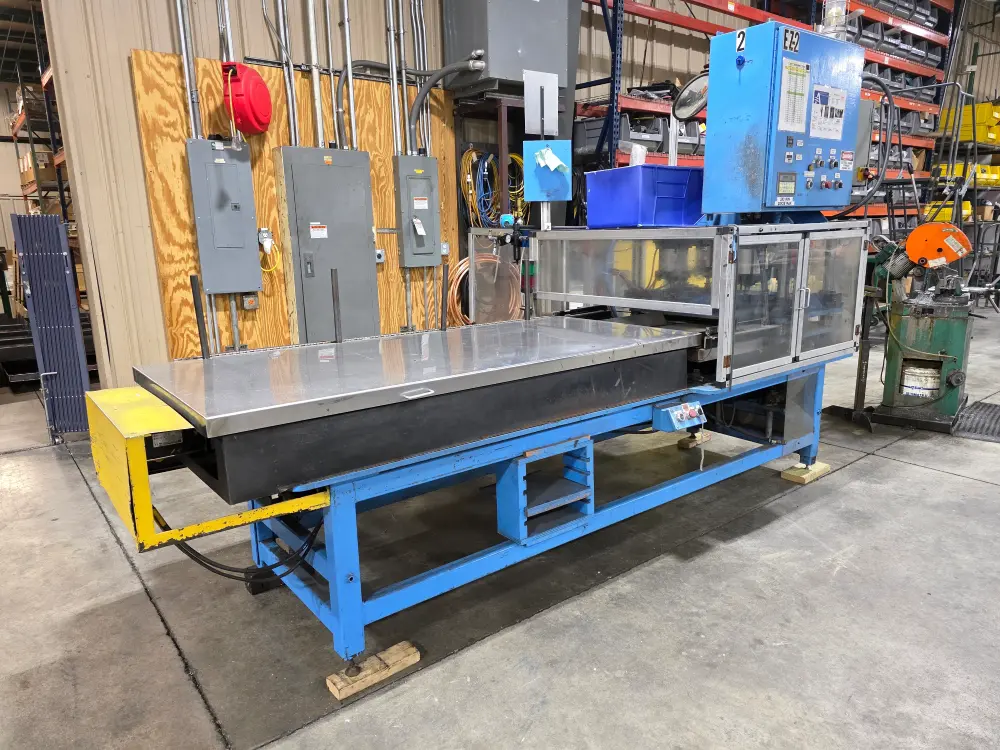
Machine before retrofit began:
Video unveiling of the completed project: